
Library & Literature
++
Library & Literature ++
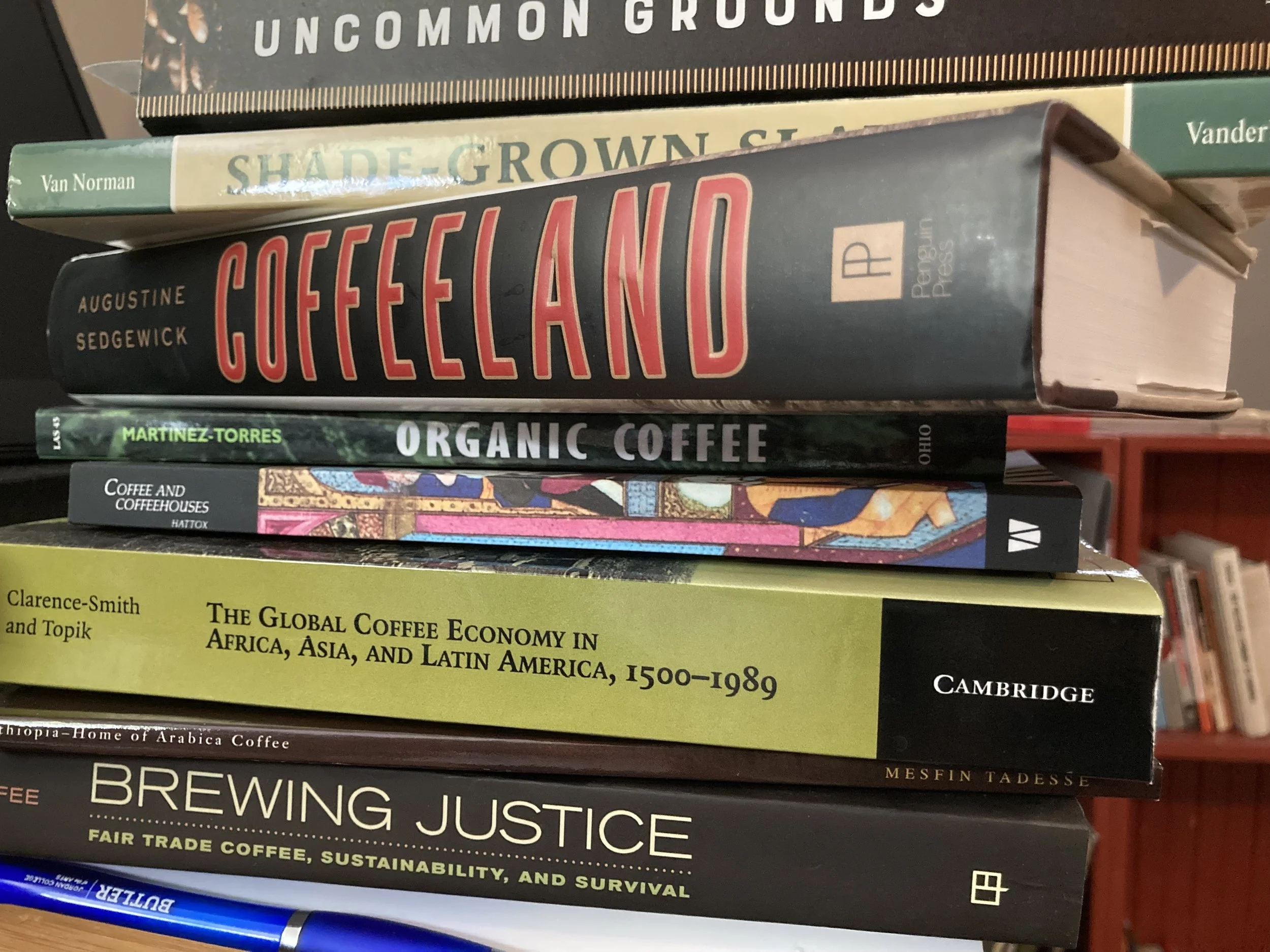
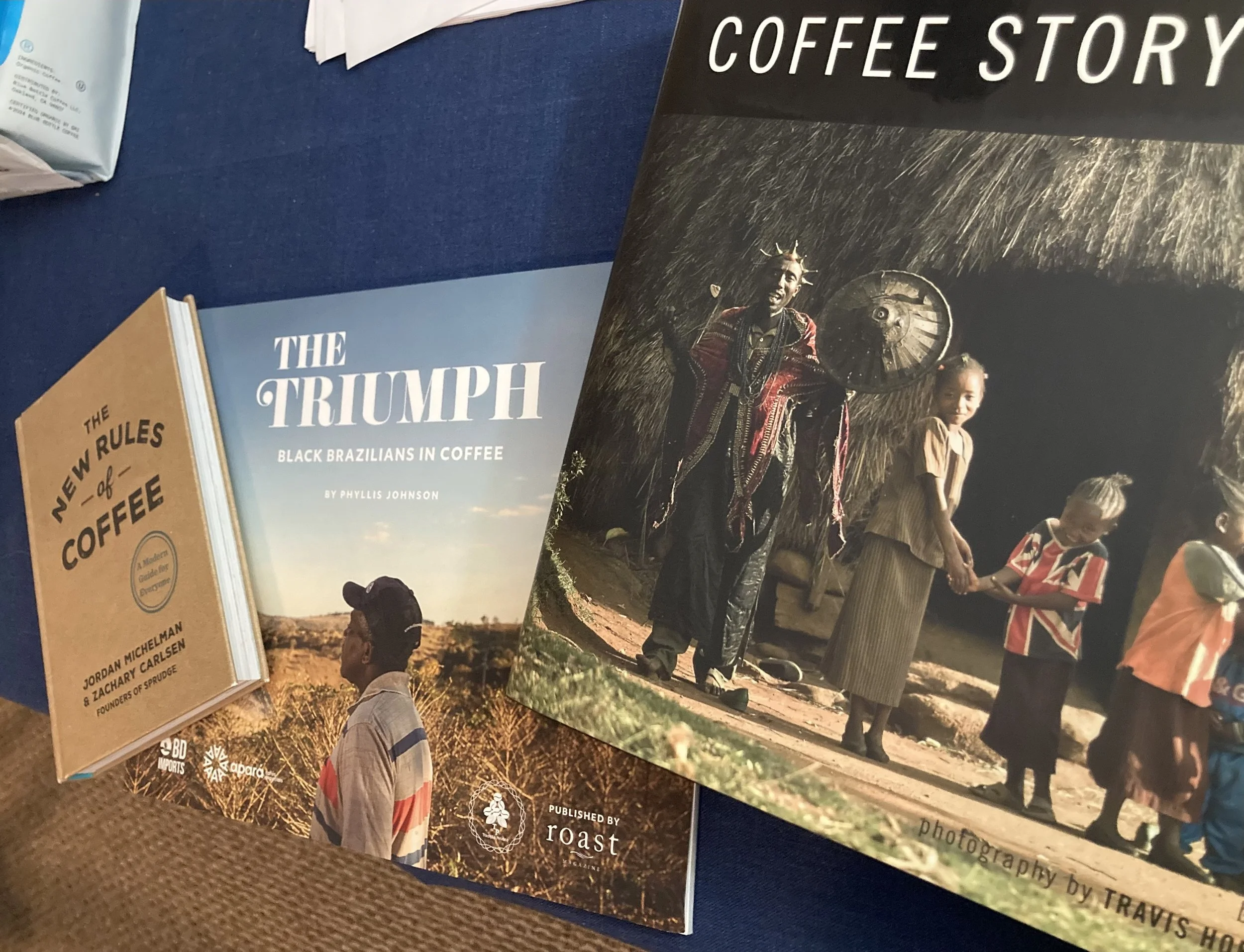
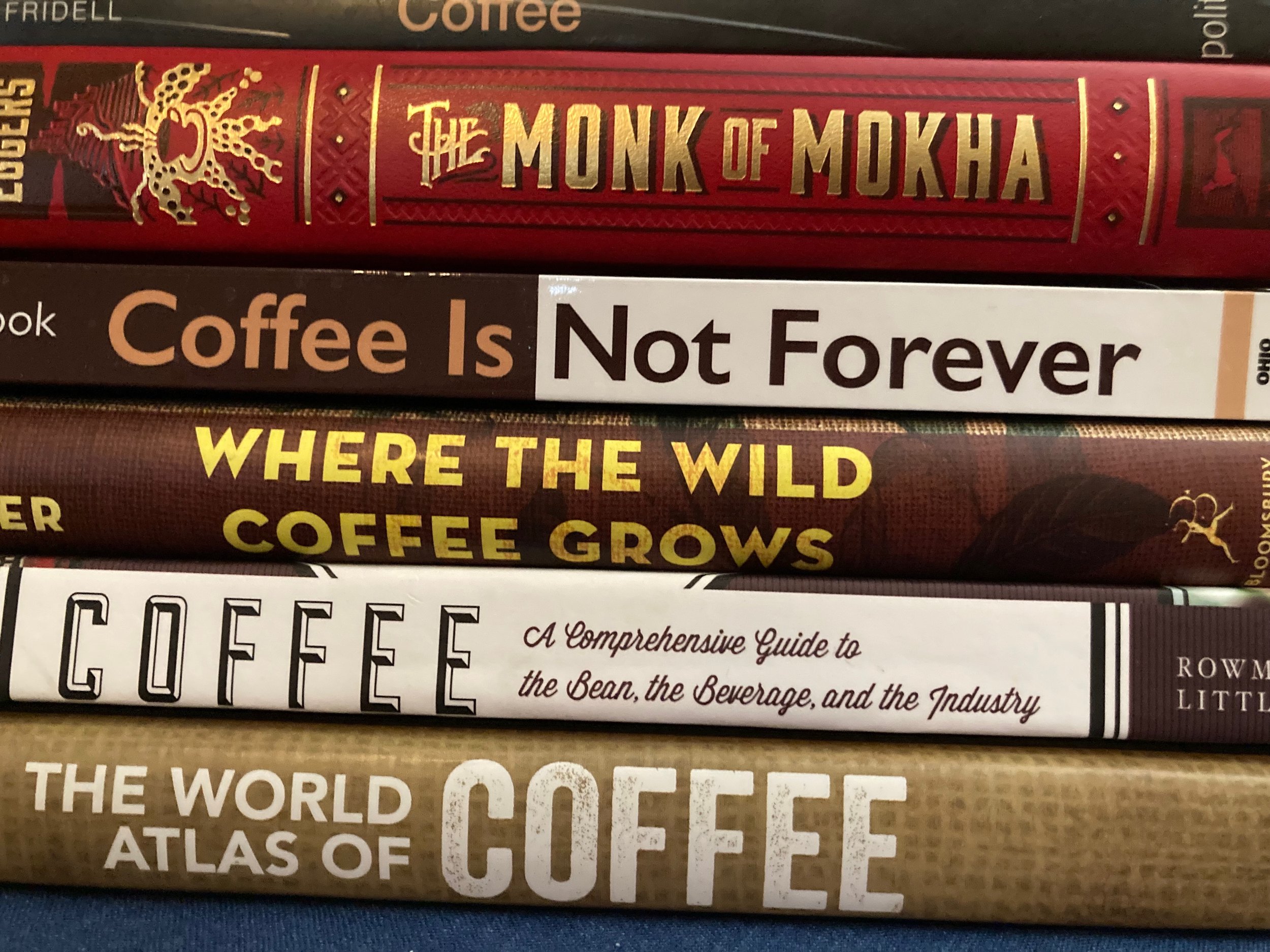
Coffee consumers need to know about coffee. And knowledge can’t, nor should it, come from one source. The source materials on this page are intended to give you a start at understanding coffee on a number of levels.
This page will be updated as time permits.
Books
S.L. Allen, The Devil’s Cup (2003): An ego-centric and, at times, quasi-racist tome about Allen’s experience in the “exotic” coffee world that exists outside of the west. In all fairness, I couldn’t finish it and so cannot authoritatively pan it. That said, I couldn’t finish it and so believe that speaks volumes to its readability and shallowness in regards to people and cultures beyond the west.
D. Eggers. The Monk of Mokha (2018): Part biography, part coffee-industry primer, part adventure novel. This book focuses on the (coffee) life of Mokhtar Alkhanshali, a Yemeni-American growing up in the Tenderloin neighborhood of San Francisco. Leading a life with little direction, Mokhtar stumbles upon the past glories of Yemeni coffee in his early 20s; the story and history compels him to resurrect the country’s coffee to global prominence. Spoiler altert: He succeeds.
G. Fridell, Coffee (2014): An important study of coffee’s moral economy over the last 300 years with a strong emphasis on its last 50 years.
J. Hoffman, The World Atlas of Coffee (2014): One of the better written and informative books on all things coffee. The regional/country chapters contain especially succinct information on the farmers and industry, even if they are a bit thin on their histories.
T. Standage, A History of the World in 6 Glasses (2006): A thoroughly enjoyable, and fantastical, read that takes one on an historical journey covering early pre-modern societies to the present day. Although Standage partakes in heavy armchair history, the book is imaginative and engaging through its attempt to cover global history and the beverages that shape each historical time period. Coffee’s place in this history emerges in the eighteenth and nineteenth centuries within the context of the information revolution and the coffee house, which Standage dubs “the Victorian Internet”.
R. Thurston, J. Morris, and S. Steiman, Coffee: A Comprehensive Guide to the Bean, the Beverage and the Industry (2013): An wide-ranging, edited volume that gives diverse perspectives on coffee in bursts of 2-15 page essays. What’s especially nice here is that the reader may browse through pieces on coffee’s history, future, quality control, growing and consumption regions, business and trade. Some highlights include an article by Phyllis Johnson on women in coffee and a history of robusta by Stuart McCook. Most importantly, Coffee doesn’t dumb down its content, nor is it riddled with academic jargon; rather, it is highly readable.
A. Wild, Coffee: A Dark History (2005): A rambling, intellectual thought piece on coffee and its tainted past. Its publication date makes it a bit dated but it has its heart in the right place.
Books on the radar: Koehler, Where the Wild Coffee Grows (2017), McCook, Coffee is Not Forever (2019), van Melkebeke, Dissimilar Coffee Frontiers (2020), Jaffee, Brewing Justice (2014), Tadesse, Ethiopia: Home of Arabica Coffee (2017), Johnson, The Triumph (2020), Pendergrast, Uncommon Grounds (2019), van Norman Jr., Shade-Grown Slavery (2013), Sedgewick, Coffeeland (2020), Clarence-Smith & Topic, The Global Coffee Economy in Africa, Asia, and Latin America (2003), Hattox, Coffee & Coffeehouses (1985), Michelman & Carlsen, The New Rules of Coffee (2018), Martinez-Torres, Organic Coffee (2006), Wienhold, Cheap Coffee (2015), Morris, Coffee: A Global History (2019)